Gillian Tindall appears to have been motivated to write by some of the same things that motivate me. The development of old villages historically.
Gillian Tindall
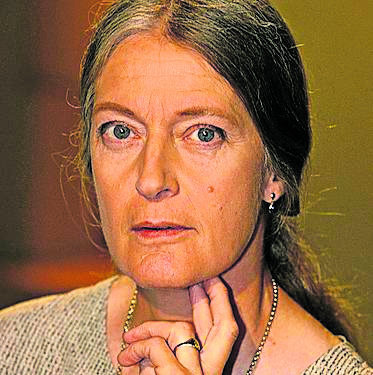
The unfolding of history from mundane phenomena — a modest house or street, a surviving cache of letters — was the distinctive gift of the historian and novelist Gillian Tindall, illuminating ordinary lives with scholarly rigour and sympathetic imagination. In addition to these pioneering works of “micro-history”, her oeuvre ranged from novels, short stories and essays to biography, radio plays and even a study of Bombay’s history and architecture.
Born in London in 1938, Gillian Elizabeth Tindall was the daughter of Dennis Tindall, a medical publisher, and the novelist Ursula Orange. Her childhood was unhappy. In Three Houses, Many Lives, she described her hated boarding school, Manor House School in Limpsfield, Surrey. Visiting long afterwards, it still filled her with “a miasma of sickly dread”. Her mother committed suicide when she was 17, an act Tindall found hard to forgive, both for herself and for her devastated younger brother.
As a precocious teenager, she spent liberating months in Paris before reading English at Lady Margaret Hall, Oxford, graduating with a first-class honours degree. It was the acceptance for publication of her first novel, while she was still an undergraduate, that persuaded her to become a writer rather than a lecturer. As a historian her breakthrough came in 1977 with the publication of The Fields Beneath: The History of One London Village, an in-depth study of the district of Kentish Town in north London. Thirteen years earlier, she had moved there with her husband Richard Lansdown, a distinguished psychologist, and bought a two-storey house in one of its oldest terraces, which was to be their home for more than 60 years until her death.
The Fields Beneath encapsulates Tindall’s way of seeing urban landscape as a palimpsest. Its appearance, in her erudite and lucid revelation, had been shaped not only by Victorian development, by the railways and even the chances of war, but by older geographies of vanished waterways and drovers’ tracks: she called the area “disguised countryside”.
Another of Tindall’s abiding fascinations was France. Paris was the setting for an early novel, Fly away Home, which won the Somerset Maugham Award, and for a book haunted by her ancestors, Footprints in Paris: A Few Streets, a Few Lives. A later, remarkable biography, The Journey of Martin Nadaud (1999), traced the career of a 19th-century French stonemason from revolutionary to exile in England and his eventual return. Characteristically she had chosen to write not about a celebrated figure, but about the rise of a humble artisan from a rural backwater. After its publication she became a Chevalier of the Ordre des Arts et des Lettres.
In 1973 Tindall and her husband had bought a second house, not a typical holiday home but a village cottage in Chassignolles, in the heart of France. And soon afterwards, while visiting an empty house there, she came upon an abandoned sheaf of letters addressed by different suitors to an innkeeper’s daughter a century and a half earlier. Tindall’s book Célestine: Voices from a French Village, to which these letters gave birth, was one of her most successful: the evocation of a rural France on the brink of transformation.
Assiduous local research, a deep knowledge of French history and a gift for scrupulous reconstruction gave the work a vivid immediacy.
For many years Tindall and her husband amassed material and photographs of 1960s London, and she became a valued voice on the conservation committee of the London and Middlesex Archaeological Society. “Directly and indirectly,” ran a recent article in the journal of the Royal Institute of British Architects, her “book [The Fields Beneath] has helped forge a way of seeing cities and places that is integral to most practising architects’ education”.
Tindall’s study of a single Bankside house built in about 1710, A House by the Thames, delved back into its succession of varied occupants, wealthy and very poor. Her other books include a study of memory, partly personal, The Pulse Glass and the Beat of other Hearts, about the evocative power of leftover objects.
Her works were often concerned with the influence of the past on the present, and the complexity of memory.
The memory of Tindall herself evokes a woman of unswerving integrity. She was blunt in dispelling pretension and stupidity, but her friendships were loyal and lasting. She is survived by Richard, her husband of 62 years, and their son Harry, a television producer. Not least, in its conviction that the death of the past impoverishes the present, she bequeaths a body of work that bears the stamp of a unique mind and sensibility.
Gillian Tindall, historian and novelist, was born on May 4, 1938. She died on October 1, 2025, aged 87


No comments:
Post a Comment